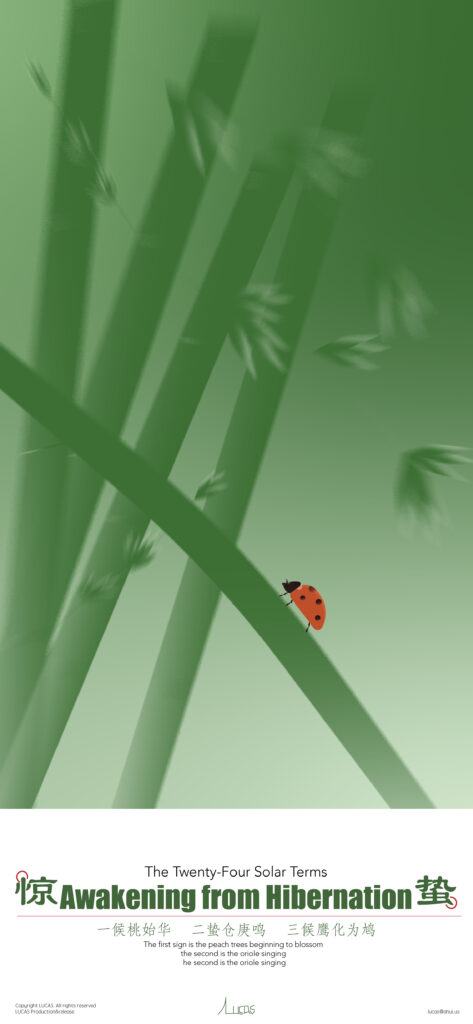
Awakening of Insects (惊蛰 Jingzhe)
Jingzhe, also known as the Awakening of Insects, is the third solar term in the traditional Chinese lunar calendar. It marks the beginning of mid-spring.
Basic Concepts:
- Time:
- It occurs annually around March 5th or 6th, when the sun reaches a celestial longitude of 345 degrees.
- Meaning:
- “Zhe” means to conceal or hide, referring to animals and insects that burrow into the earth during winter, remaining dormant without eating or drinking.
- “Jingzhe” signifies the first spring thunder, which awakens the hibernating insects underground, symbolizing the revival of all living things.
- The arrival of Jingzhe also indicates a rise in temperature and warmer weather.
Phenological Characteristics:
- Jingzhe is divided into three pentads:
- First pentad: Peach blossoms begin to bloom.
- Second pentad: Orioles begin to sing.
- Third pentad: Hawks transform into doves (meaning they become less fierce).
- These phenological phenomena demonstrate that Jingzhe is a season full of spring vitality and vibrant life.
Agricultural Activities:
- During Jingzhe, most areas in China enter the spring plowing season, and farmers begin their busy work of sowing and tilling the fields.
- This solar term is very important for agricultural work.
Traditional Customs:
- Worshipping the White Tiger and “Beating the Petty Person”:
- In some regions, there are customs of worshipping the White Tiger and “beating the petty person” to ward off bad luck and pray for peace.
Historical Origins:
- Jingzhe was originally called “Qizhe.”
- During the Han Dynasty, to avoid the personal name of Emperor Jing of Han, “Qi” was changed to “Jing.”
In summary, Jingzhe is a solar term filled with vitality and hope. It not only symbolizes the revival of nature but also reminds people to begin their hard work and embrace a new beginning.



0 条评论