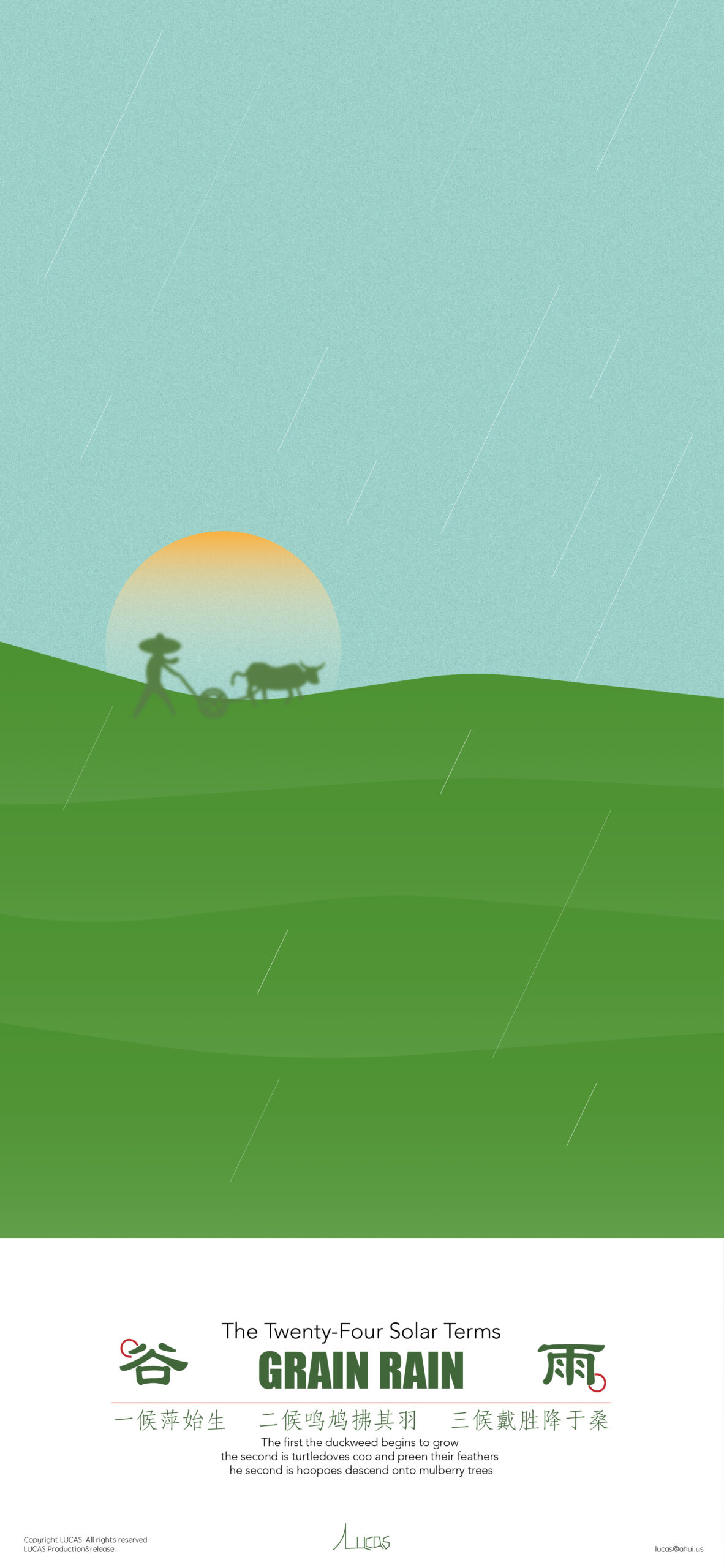
GRAIN RAIN (谷雨 Guyu)
谷雨 (gǔ yǔ) translates to “Grain Rain” and is the 6th of the 24 solar terms in the traditional East Asian calendars. It typically falls around April 20th each year, marking the end of spring and the beginning of summer.
The name “Grain Rain” signifies a crucial time for agriculture, as the rainfall during this period is vital for the growth of newly sown crops. As the saying goes, “the rain feeds all grains.” Farmers often seize this opportunity to plant rice, corn, and beans.
Here are some key aspects associated with Guyu:
- Agricultural Significance: It’s a critical period for planting and the growth of grains, hence the name.
- Weather: Warmer temperatures and increased rainfall are characteristic of this time.
- Traditions:
- In coastal areas, rituals may be held to “worship the sea” for safety and a good harvest during the fishing season.
- There’s a legend connecting Guyu to Cangjie, the mythical creator of Chinese characters. It’s said that when he invented writing, the heavens rained down millet as a reward. Some places still have customs of paying tribute to Cangjie on this day.
- Guyu is also associated with the blooming of peonies, which are considered a beautiful flower to admire during this time.
So, in essence, 谷雨 (Guyu) is a solar term that highlights the importance of rain for agriculture as spring transitions into summer. It’s a time linked with planting, specific weather patterns, and some interesting cultural traditions.



0 条评论